How to Budget for an Engagement Ring (Real Numbers)
No rule says you must spend two months' salary on a ring. Here's how to set a number that makes sense for your actual finances and save toward it without stress.
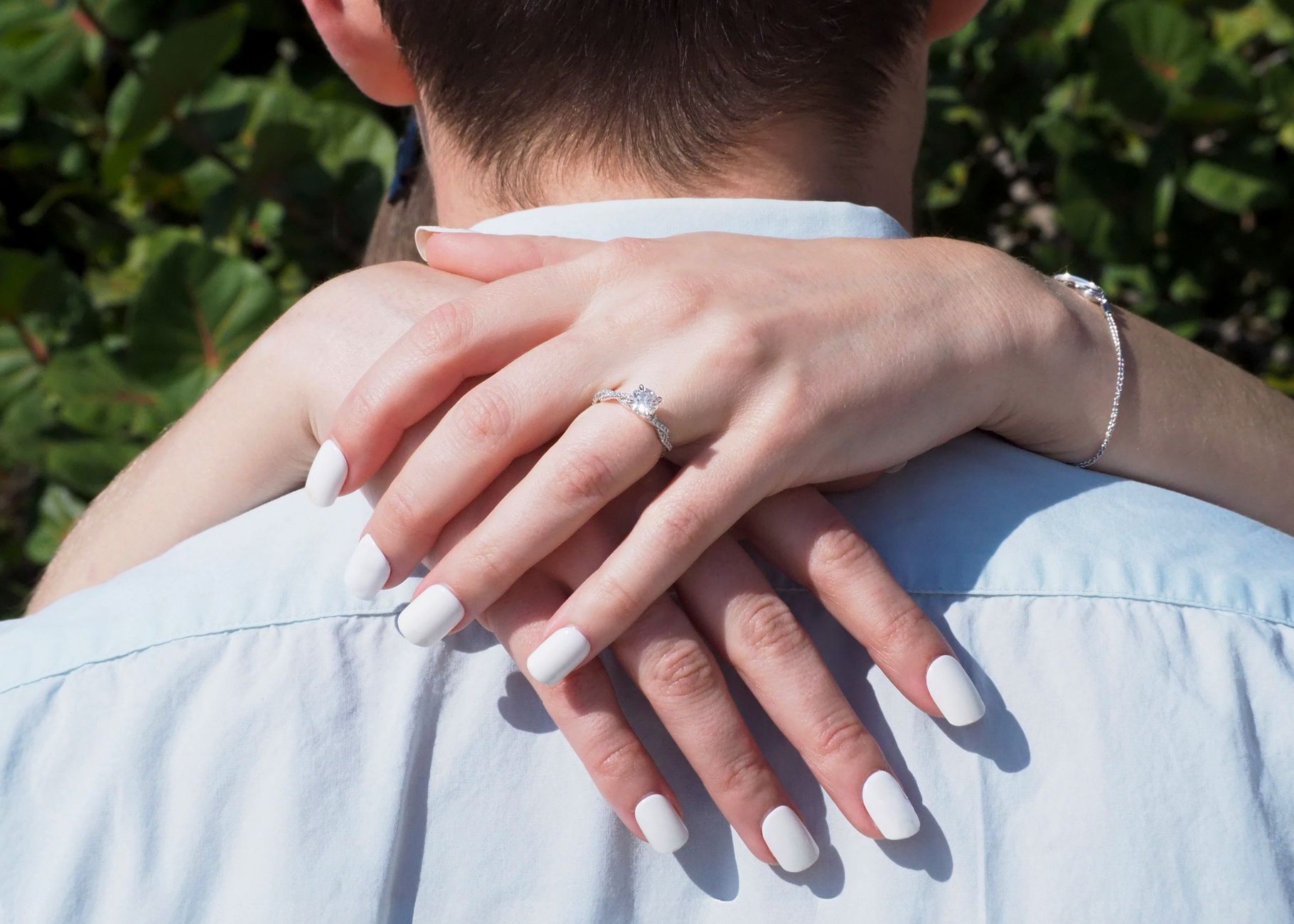
An engagement ring is a symbol of lifelong commitment and, occasionally, three months of financial regret. One does not have to follow the other.
You're thinking about proposing. The feelings are clear. The budget is not. That's normal, and it's fixable with a plan that starts with your actual numbers instead of a jewelry store's marketing slogan.
The "Two Months' Salary" Rule Is Not a Rule
You've heard it. Two months' salary on the ring. Maybe three. That framing comes from a De Beers advertising campaign, not from any financial principle worth following. There is no correct dollar amount. There is only the amount that fits your life.
What actually matters:
- What you can save without carrying new debt
- What your partner actually wants (a lot of people prefer something modest, and some prefer no ring at all)
- What else is happening financially in the next 12 months (a wedding, a deposit, a move)
If you earn $60,000 a year, two months' gross salary is $10,000. That's real money. It's also potentially a year of emergency-fund contributions or a chunk of a down payment. Spending it on a ring is not wrong. Spending it because you felt you had to is a different story.
Set the number yourself, before you walk into any store.
Step 1: Figure Out What You Can Actually Save
Before you pick a ring budget, look at your cash flow for the next six to twelve months.
Pull up three months of bank statements. Find your average monthly take-home after rent, utilities, groceries, transportation, and any debt payments. What's left over is your discretionary income, the amount you could redirect if you chose to.
Say your take-home is $4,200 and your fixed costs run $3,100. That's $1,100 of monthly breathing room. You're not going to send all of it to a ring fund, but say you commit $300 a month.
- 6 months of saving: $1,800
- 9 months of saving: $2,700
- 12 months of saving: $3,600
Those are real, reachable ring budgets that don't require a credit card. Write down what your version of that table looks like. That's your starting point.
Step 2: Decide Whether You'll Pay Cash or Finance
Paying cash means saving first and buying later. It takes longer, but you own the ring outright and pay nothing in interest.
Financing means buying now and paying over time. Jewelry store financing often carries high interest rates, sometimes well above 20%, especially on promotional "no interest if paid in full" plans that backfire if you don't pay them off exactly on time. A standard credit card is rarely better.
If you're going to finance, treat it like any other debt. Know the interest rate before you sign. Know what the total cost is, not just the monthly payment. A $2,500 ring at 24% interest over 18 months costs closer to $2,900. That's $400 for the privilege of not waiting.
Brenda's take: buying the ring you can afford in cash usually beats buying the ring you can barely afford on credit. But only you know your full picture.
Step 3: Set a Named Savings Goal and Automate It
A goal called "ring fund" with a specific dollar target and a monthly deposit is the only reliable way to get there without thinking about it constantly.
Pick a number. Pick a date. Divide one by the other.
Say you want $2,400 saved in 10 months. That's $240 a month. Set up an automatic transfer to a separate savings account on payday, before that money touches your checking account. If it never lands in the account you spend from, you won't spend it.
This is not complicated. It is genuinely the step most people skip. They plan to "save what's left over," and what's left over is consistently less than expected. We hear a version of this story constantly: income goes up, intention is good, and eight months later the ring fund has $200 in it because life kept interrupting.
Automate the transfer. Treat it like a bill.
Step 4: Look for Honest Ways to Stretch the Budget
A ring at $1,500 can look identical to one at $4,000 depending on a few choices. This isn't a compromise. It's information.
| Choice | What it saves | What it changes |
|---|---|---|
| Lab-grown diamond vs. mined | Often 50–70% less | Visually identical; no physical difference |
| Slightly under round carat sizes (0.9 ct vs 1.0 ct) | Noticeable price drop | Almost no visual difference |
| White gold vs. platinum | Roughly 40–50% less | Durability similar; white gold needs replating every few years |
| Vintage or estate ring | Wide range, often less | One-of-a-kind; requires inspection for condition |
None of these are "settling." They're decisions. A $1,800 lab-grown stone in a simple setting can be a better ring than a $4,500 mined stone in a busy setting. Taste is the variable, not quality.
Step 5: Protect the Rest of Your Budget
The ring is one event in a larger financial year. If you're also planning a wedding, that cost is often many times the ring cost. If you don't have an emergency fund yet, a three-month spike in saving for a ring while leaving yourself with zero cushion is a risk worth naming.
You don't have to choose one goal at a time. You can split your monthly savings across goals. $200 to the ring fund, $100 to the emergency fund, every month, is a real plan. Progress on both beats perfection on neither.
The month the ring is bought, redirect the ring fund savings somewhere else immediately. Don't let that $200 or $300 just dissolve into spending. Give it a new job before it disappears.
What to Do This Week
- Calculate your monthly discretionary income using three months of real statements.
- Pick a realistic monthly savings amount for the ring, not aspirational, real.
- Set the end date and the total target. Divide them.
- Open a separate savings account and automate the transfer.
- Put a calendar reminder to check the balance monthly, not obsessively, just to confirm the plan is running.
If you use Brenda, setting up a named goal with a target amount and automatic tracking takes a few minutes and keeps the ring fund separate from your regular spending so you can see progress without doing math.
The ring does not have to be the expensive part of getting engaged. The plan does not have to be complicated. Start with your real numbers, and the right budget will show itself.
Read less about money.
Do more with it.
Brenda drafts your budget, reads the receipts, and tells you the truth, kindly. Free on iOS and Android.