How to Budget for an Engagement Ring Without the Debt
Ready to pop the question but not ready to pop your savings? Here's how to set a real ring budget and save for it without wrecking your finances.
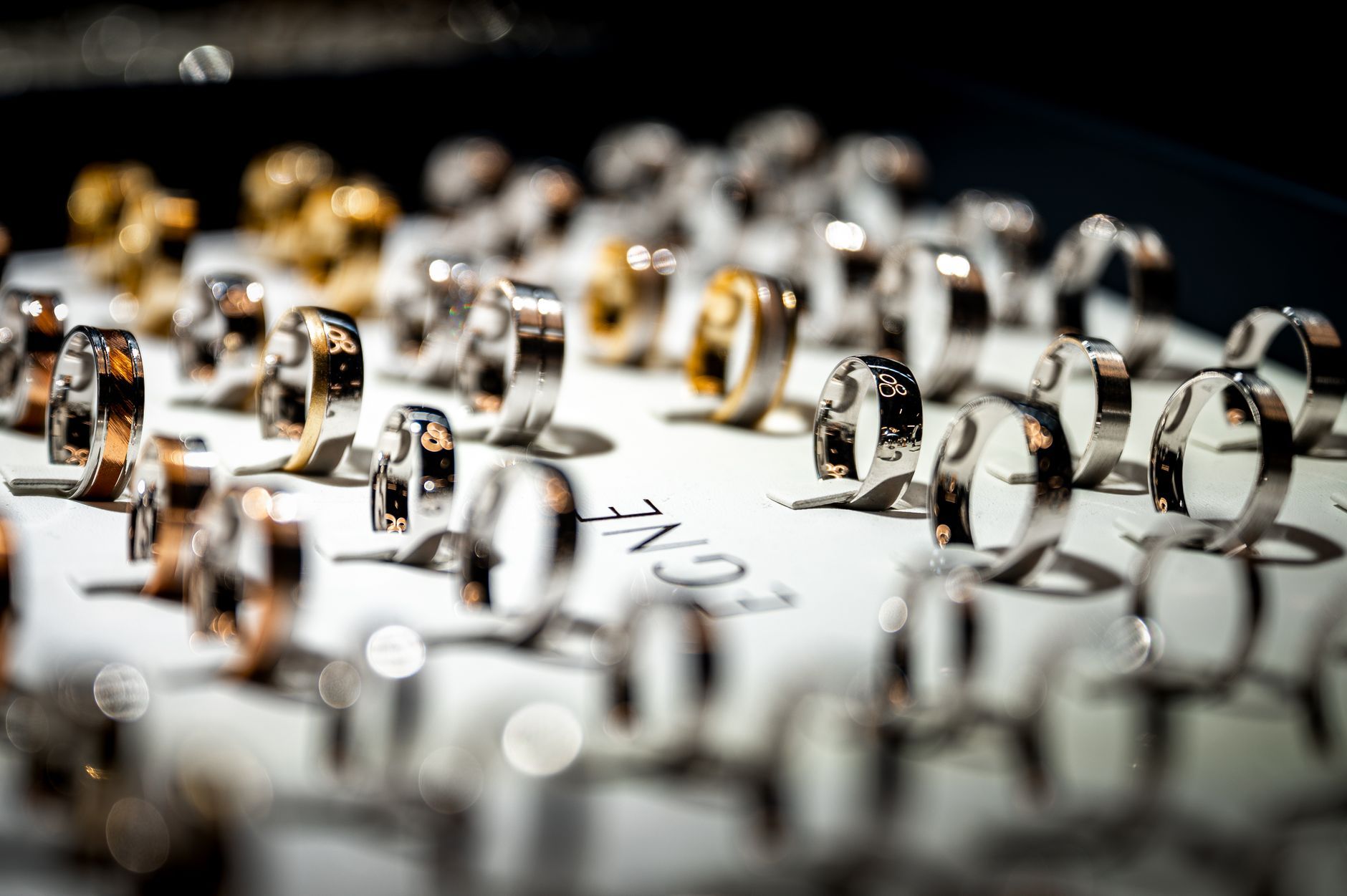
An engagement ring is the only purchase where "two months' salary" became a shopping rule. That guideline was invented by a diamond company. Worth knowing before you set your budget.
The good news: you can buy a ring that means everything and pay for it the right way, with a number that makes sense for your actual life, not a marketing slogan from the 1980s.
How to Budget for an Engagement Ring
The first step is treating the ring like what it is: a large, planned purchase. Not a tab you settle later, not a number you reverse-engineer from a jeweller's case. A savings goal with a deadline.
Here's how to build that budget.
Step 1: Decide what you can actually afford
Pull up your monthly numbers. What's left after rent, groceries, bills, and any existing debt payments? That's your starting point.
Don't confuse "what I could put on a card" with "what I can afford." Those are very different numbers, and only one of them is honest.
If your monthly surplus is roughly $400, and you want to propose in 12 months, your ring budget is around $4,800 before you touch any existing savings. If you can contribute some savings on top of that, great. If you can't, then $4,800 is your honest ceiling.
Write that number down. Everything else in this post flows from it.
Step 2: Set a named savings goal
A goal called "Savings Goal #2" never got anyone to the finish line. Name this one. "Ring fund." "The question." Whatever makes it real.
Then separate it from your general savings. When ring money and emergency money share an account, ring money tends to disappear into emergencies, and emergency money quietly becomes ring money. Keep them apart.
Open a dedicated account or, if you use a budgeting app, create a separate envelope just for this. Set an automatic transfer on payday, before you have a chance to spend the money on something else.
Step 3: Set a deadline, then do the math on the page
Say you want to propose in 10 months and your budget is $3,500.
- $3,500 divided by 10 months = $350/month
- If that's too tight, push the timeline: $3,500 over 14 months = $250/month
That's the whole calculation. The "right" engagement ring budget is the one you can save for without going into debt or gutting your emergency fund.
Step 4: Find the slack in your current spending
Most people have $100–$300 a month that's neither essential nor loved. It's the streaming service you forgot about, the food delivery habit that crept in, the gym you keep meaning to go back to.
A C+R Research survey found that people estimate they spend about $86 a month on subscriptions. The actual average is closer to $219. That gap is the ring fund that writes itself.
Spend one evening reading three months of bank statements. Look for charges that have been there so long you've stopped seeing them. Cancel the ones that don't matter. Redirect that cash to the ring account automatically.
It won't feel dramatic. It rarely does. But $80/month freed from subscriptions you don't care about is $960 over the course of a year.
Step 5: Resist the upgrade spiral at the jeweller
Once you know your number, protect it at the counter. Jewellers are skilled at the "just a little more" conversation. It's their job. You can admire a ring that's outside your budget and still say no.
A few things worth knowing before you shop:
- Cut quality affects sparkle more than most buyers expect. A smaller stone with an excellent cut often outshines a larger stone with a poor one.
- Metal choice moves the price significantly. Platinum costs more than white gold; white gold costs more than sterling silver. Both can look nearly identical in a setting.
- Lab-grown diamonds are chemically identical to mined stones and typically cost 50–80% less for the same size and grade. That's a real budget lever, not a compromise.
None of these are the "right" choice. They're trade-offs you should make consciously, not ones a sales floor should make for you.
What About Financing?
Jeweller financing plans exist. Some are 0% interest for a promotional period, which sounds appealing until the period ends and a backloaded rate kicks in.
General education only here: if you carry the balance past the promotional window, the interest charges are often retroactive on the full original amount. Read the terms carefully. A card you don't pay off in full is costing you more than the ring's sticker price.
If you need to finance any portion, factor the monthly payments into your budget before you buy, not after.
The Cost of Skipping the Plan
Picture this: you skip the savings goal, put the ring on a card, and make minimum payments. At a typical card rate (often north of 20%), a $3,000 ring can cost you $600 or more in interest before it's paid off, depending on how long it takes. That's a weekend trip. A couple of months of groceries. Money that could have gone toward the wedding, the honeymoon, or the first year of your life together.
The ring is the starting line, not the finish. The finances after the proposal matter at least as much.
A Practical Budget Range to Work With
Ring prices vary enormously, but here's a rough sense of what different budgets can get you (as general ranges, not guarantees):
| Budget range | What's realistic |
|---|---|
| $500–$1,500 | Lab-grown diamond or moissanite solitaire, silver or gold vermeil band |
| $1,500–$3,500 | Lab-grown or smaller natural diamond, solid gold or white gold setting |
| $3,500–$6,000 | Wider range of natural diamond sizes and settings |
| $6,000+ | Larger stones, custom work, premium metals |
There's no minimum that makes the proposal count. There is a maximum you can afford without going into debt.
Your One Action This Week
Calculate your honest ring budget today. Monthly surplus multiplied by months until your deadline. That's your number. Then open a dedicated savings account or envelope and set up an automatic transfer for that monthly amount starting with the next payday.
Brenda makes it easy to name that goal and track the savings alongside the rest of your budget, so you can see exactly where you stand without digging through statements.
The rest is just time.
Read less about money.
Do more with it.
Brenda drafts your budget, reads the receipts, and tells you the truth, kindly. Free on iOS and Android.